A moisture-first investigation
Mold is usually a symptom. We track moisture sources and conditions that support growth, including building materials that may be damp behind finishes.
Serving Sarasota, Florida & surrounding areas
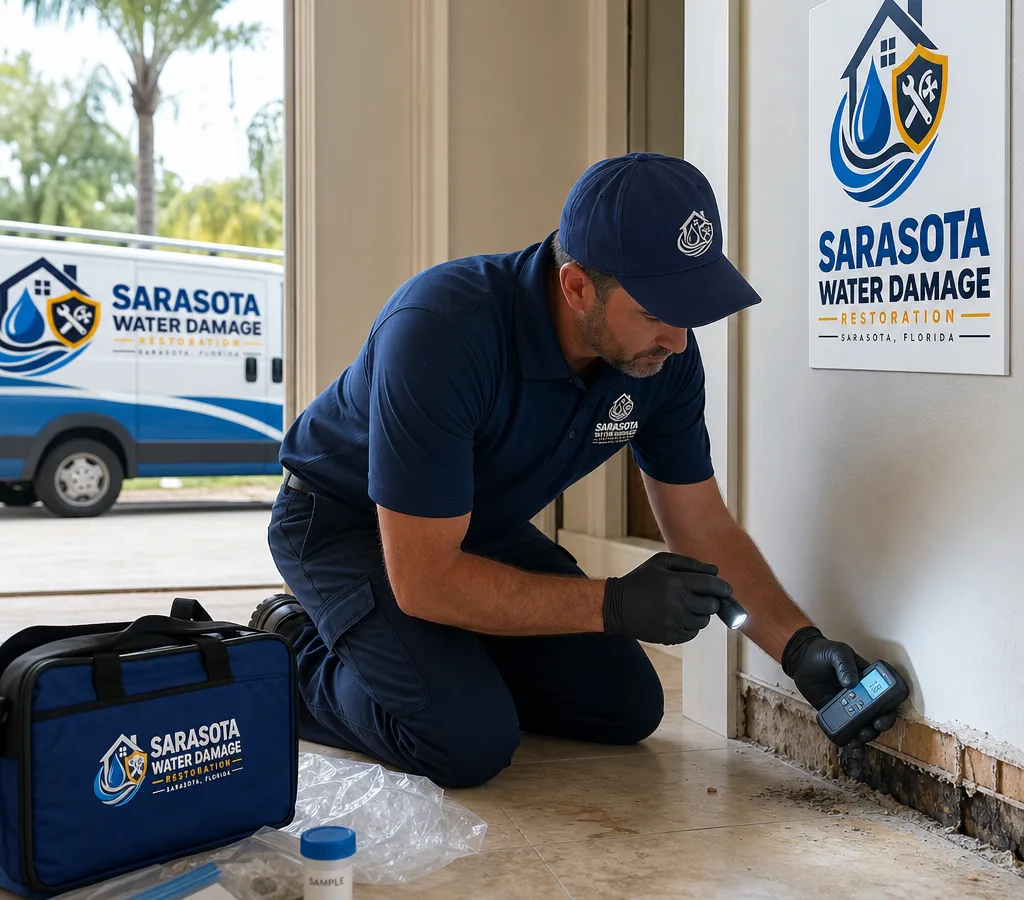
Mold Inspection • Sarasota, Florida
If you smell something musty, see staining, or have had a recent leak, a professional inspection can confirm whether mold is present, map where moisture is coming from, and spell out the next steps in plain language.
Inspect • Trace • Document
A good mold inspection starts with one goal: figure out what is happening in your property and why. Our team at Sarasota Water Damage Restoration provides mold inspection Sarasota homeowners, landlords, and businesses can use to make decisions confidently. That means looking for visible growth, checking likely moisture pathways, and documenting conditions so you can act on real findings instead of assumptions.
Sarasota's humidity and frequent summer storms create long windows where damp materials can stay wet. Mold can follow after a roof leak, a slow plumbing drip, a backed-up drain line, or a past AC issue. If you are dealing with allergies, persistent odors, or a room that never feels dry, an inspection is the fastest way to confirm whether the concern is mold, moisture, or something else entirely.
We work across Sarasota, including coastal homes where wind-driven rain can find its way into wall cavities, and inland neighborhoods where older windows, aging caulk lines, or past renovations can hide small leaks. If you are unsure whether the situation is urgent, it is still worth scheduling an assessment so you know what you are dealing with before you renovate, sell, or sign a lease.
Useful findings, not assumptions
Mold is usually a symptom. We track moisture sources and conditions that support growth, including building materials that may be damp behind finishes.
We note locations, visible staining, odor observations, and moisture readings so the findings are easy to follow and share with decision-makers.
When sampling is appropriate, we collect it carefully to help confirm what you are looking at and where it is concentrated, rather than guessing from appearance alone.
You will get clear options: what to fix first, what can be monitored, and what needs professional containment and removal based on conditions observed.
We can prioritize time-sensitive situations such as real estate deadlines, tenant complaints, or a post-leak check before rebuilding.
Evidence-led assessment
A thorough mold inspection is a mix of building science and practical field work. We start by listening to the story of the property. When did the odor start, what changed, what repairs were made, and where does water show up after storms or heavy AC use.
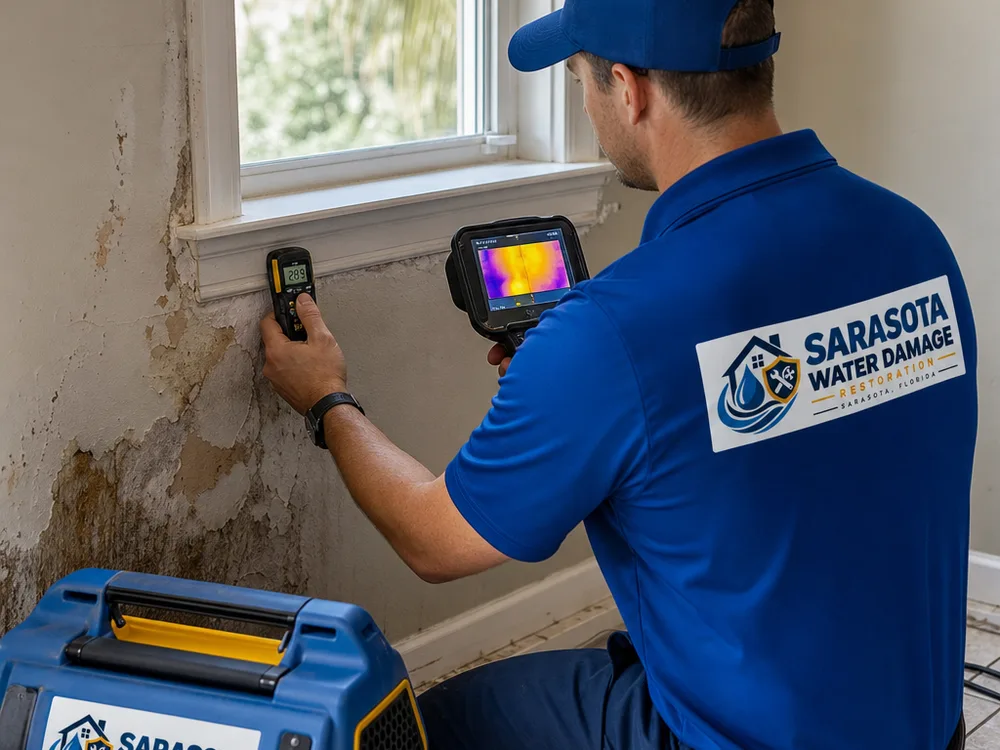
From there, we inspect likely moisture and mold locations: bathrooms, kitchens, laundry areas, around windows and exterior doors, under sinks, near air handlers and supply returns, and along baseboards where moisture can wick into drywall. We use tools such as moisture meters and thermal imaging as a screening aid to find suspicious temperature patterns that can point to damp areas. We also look for common clues like bubbling paint, swollen trim, staining, soft drywall, or condensation patterns.
If sampling is appropriate, we explain what it can and cannot tell you. Sampling can help confirm whether an area is contributing to a problem, compare indoor and outdoor conditions, or validate whether a specific space is affected. The goal is a defensible snapshot of conditions so you can decide on repairs, remediation, or monitoring with less uncertainty.
If moisture intrusion is suspected from a prior loss, our team can also coordinate the broader work through water damage restoration when needed, but the inspection always comes first: confirm the issue, define the scope, then choose the right fix.
Measured from first concern to findings
You tell us what you have noticed, where it is happening, and whether there was a leak, storm intrusion, plumbing issue, or prior drying work. We schedule around your availability and any real estate or tenant deadlines.
We inspect the areas of concern and the most likely moisture pathways, take moisture readings, and document visible conditions and odors.
If sampling helps answer the question at hand, we collect it in a controlled way and explain what information it can provide for your situation.
We walk you through what we found, what it likely means, and what to do next. If professional cleanup is indicated, we can outline the containment approach and scope.
Planning the assessment
Mold inspection in Sarasota typically ranges from about $250 to $750, depending on property size, how many areas need evaluation, and whether sampling is included. A smaller condo or a single-area concern is usually at the lower end, while larger homes, multi-unit properties, or inspections that require multiple samples tend to cost more.
Final pricing changes with accessibility (attic or tight crawlspaces), how much moisture tracing is needed, and the complexity of the suspected source (roof, plumbing, HVAC, window intrusion). The exact cost is confirmed during scheduling and finalized at the on-site inspection once scope is clear.
Prepare for useful findings
A few simple steps can make your mold inspection more accurate:
Avoid relying on air fresheners or dehumidifiers as your only response if you suspect an active moisture problem. Lowering humidity can reduce odor, but it does not explain where the moisture is entering or whether materials are already affected.
If you are in a buying or selling situation, an inspection is also a way to reduce last-minute surprises. A written set of findings helps you decide whether you need further evaluation, a targeted repair, or a defined remediation scope before you close.
Request Emergency ServiceCustomer evidence
“We had a musty smell that came and went. The inspection found elevated moisture along one wall and explained how wind-driven rain was getting in. Having it documented made it easy to plan the repair and cleanup.”
“They were straight with us about what sampling would and would not prove. The walkthrough and notes were the most helpful part because we finally understood what needed to be fixed first.”
Answers before the visit
Scheduling depends on current demand, but we prioritize time-sensitive situations like post-leak concerns and real estate timelines whenever possible. Share your deadline and the areas of concern so we can route the visit efficiently and bring the right tools for moisture tracing and documentation.
An inspection is the starting point, and testing is used when it answers a specific question such as confirming whether a suspected area is contributing to a problem or documenting conditions for a transaction. If visible growth and moisture conditions already support a clear plan, testing may be optional, and we will explain that on site.
Yes, we commonly inspect around air handlers, condensate lines, supply and return areas, and surfaces where condensation can occur. In Sarasota's humid conditions, AC-related moisture can show up as damp drywall near returns, wet insulation, or recurring musty odors, so we treat HVAC as a key part of the building moisture picture.
Yes, we inspect condos and apartment units, and we pay close attention to shared-wall and shared-plumbing conditions where moisture can travel between units. If the concern may involve common elements, we can document what is visible within your unit so you have clear information to share with property management or an HOA.
If we find conditions consistent with mold growth, we will explain the likely cause, what materials are involved, and what the next step should be based on what is observed. When professional remediation is appropriate, we can outline containment and removal options and how the space should be dried before rebuilding or re-occupancy decisions.
A standard inspection is non-invasive and is usually safe to be present for, since it focuses on observation, moisture readings, and targeted sampling when needed. If a space has heavy visible growth or strong irritation symptoms are occurring, we can discuss practical precautions for that specific area during the visit.
Know what is happening before you act
Tell us what you are seeing or smelling and where it started. We will schedule a mold inspection, document the findings, and help you decide what to repair, what to remediate, and what can be monitored.