After a leak or overflow that soaked building materials
If drywall, cabinets, insulation, or flooring stayed damp, testing can help determine whether you are dealing with simple moisture staining or contamination that needs controlled removal.
Serving Sarasota, Florida & surrounding areas
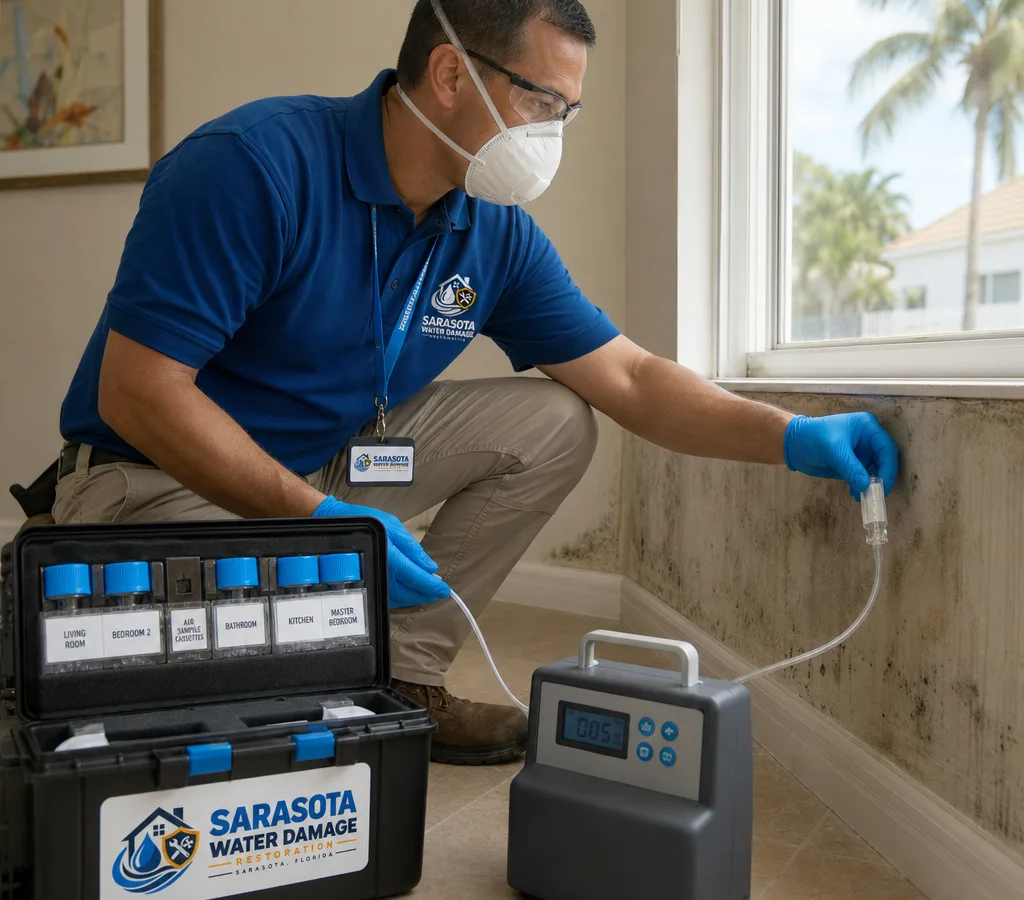
Mold Testing • Sarasota, Florida
Get clear, documented results and a practical next-step plan for your home or business, based on professional sampling and on-site inspection.
Inspect • Sample • Document
If you are searching for mold testing Sarasota FL, you usually want one thing: reliable answers you can act on. A musty odor, allergy-like symptoms indoors, past leaks, or recent flooding can all point to elevated moisture and potential microbial growth, but you cannot confirm what is present or how far it has spread by sight alone.
Our mold testing work in Sarasota focuses on identifying conditions that allow mold to grow, locating likely reservoirs, and collecting samples when they will actually change the decision you need to make. That might mean confirming whether a suspicious area is mold, checking indoor air compared to outdoor baseline, or documenting contamination before a property sale or renovation.
Sarasota's humid climate and heavy rain events make moisture management a constant issue. Homes with tight indoor air, closed-up seasonal use, or older building assemblies can trap moisture in wall cavities, under flooring, or in attic insulation. Testing is most helpful when it is paired with a careful inspection of where water has been, where it is now, and what materials stayed damp long enough to become a problem.
Methodical inspection
Good mold testing is not a single gadget reading. It is a methodical inspection plus targeted sampling.
Typical components include:
In neighborhoods with a mix of older and newer construction, the approach matters. A condo near downtown or along the bay may have different airflow patterns and shared-wall considerations than a single-family home in Gulf Gate Estates, and that can change where we look first and how we interpret what we find.
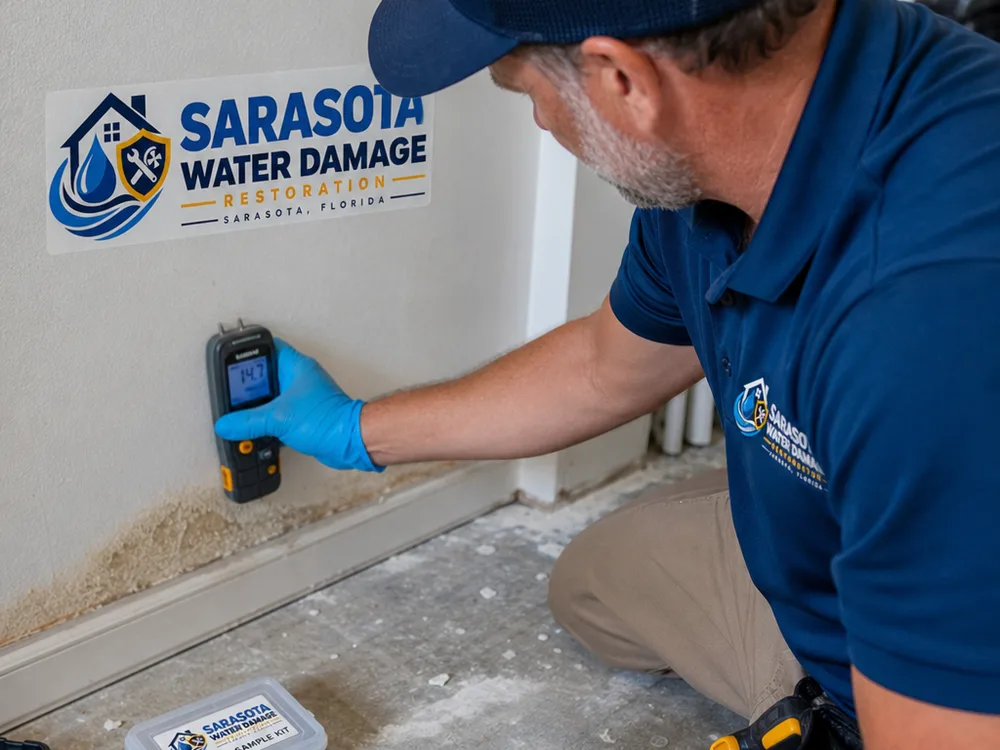
When testing adds clarity
If drywall, cabinets, insulation, or flooring stayed damp, testing can help determine whether you are dealing with simple moisture staining or contamination that needs controlled removal.
Odor often comes from hidden areas such as under sinks, behind baseboards, inside wall cavities, or around HVAC components. Inspection guides where sampling makes sense.
Documented results help buyers and sellers make decisions and help contractors avoid opening walls that contain contamination without containment planning.
Testing can provide data to share with healthcare providers and can guide corrective work, but it is not a medical diagnosis and cannot prove causation.
If you can see extensive mold-like growth over a large area, the priority is correcting moisture and planning safe remediation. Sampling may be used for documentation, not to decide whether action is needed.
From concern to clear action
We start by understanding the trigger for testing: a recent leak, a persistent odor, visible staining, a real estate deadline, or a post-remediation verification. The goal drives the sampling plan.
We check likely moisture entry points and materials that hold water. In Sarasota, we often pay special attention to HVAC condensate issues, bathroom exhaust performance, and areas that stay closed up for long periods.
When sampling is needed, we collect the right type (air and/or surface), note conditions, and use an outdoor baseline when it improves interpretation. We avoid random sampling that produces confusing results.
Samples go to a qualified lab for identification. You receive findings in plain language along with photos and location notes so you know what was tested and why.
Results are tied to an action plan: fix the moisture source, clean or remove affected materials, set up containment if needed, and plan follow-up verification when appropriate. If the issue traces back to a recent water incident, our team also provides water damage restoration support so drying and repairs align with what the inspection found.
Planning the sampling scope
Mold testing in Sarasota typically ranges from about $250 to $750+, depending on the size of the property and how many samples are needed. A focused inspection with 1 to 2 samples is often at the lower end, while larger homes, multi-room concerns, or real estate documentation with multiple air and surface samples can increase the total.
Final pricing depends on travel and access, the number of areas to evaluate, whether an outdoor baseline sample is needed, and whether the concern is localized or building-wide. The exact cost is confirmed after the on-site inspection and the sampling plan is agreed on.
Sarasota conditions
Sarasota's humid climate, heavy rain, subtropical storms, and coastal wind-driven rain can keep building materials damp long after a visible water event has passed.
Slab homes can conceal moisture beneath flooring, while closed-up seasonal properties may trap humid air for extended periods. HVAC condensate issues, bathroom ventilation, window transitions, and older repairs are common places to investigate.
Because microbial growth can develop rapidly when materials stay wet, the inspection focuses on both current readings and the property's moisture history—not samples in isolation.
Request Emergency ServiceCustomer evidence
“We had a musty smell that came and went. The inspection found moisture behind a bathroom vanity and the testing confirmed the area needed to be opened and cleaned out. The report was easy to follow and helped us talk to our contractor.”
“We needed mold testing quickly for a condo sale. Scheduling was straightforward, the sampling felt organized instead of random, and the documentation helped keep the transaction moving.”
Answers before inspection
Scheduling depends on demand, but many inspections can be arranged quickly because sampling and moisture checks are done on-site. If you have a real estate deadline or recent water intrusion, share the timeline up front so the inspection and lab turnaround can be planned around it.
It depends on the problem you are trying to solve. Air sampling helps compare indoor air to an outdoor baseline and can support whole-area concerns, while surface sampling confirms whether a specific spot is mold-like growth. Many Sarasota inspections use a mix when there is both a suspected source area and a question about broader exposure.
Testing identifies what is present in the sample and, paired with inspection, helps narrow likely source areas, but it cannot magically pinpoint a hidden cavity without investigation. Moisture mapping, building-assembly knowledge, and targeted openings (when appropriate) are what ultimately confirm the source location.
Leave the area as normal as practical: avoid heavy cleaning, air purifiers, or changing HVAC settings right before the visit because that can alter air sampling conditions. If you can, list any past leaks, roof or window issues, and where odors are strongest so the inspection starts in the right places.
For decision-making, a professional inspection is usually more useful than a kit because sampling without a moisture investigation often creates unclear results. A trained inspector can decide whether air sampling is appropriate, where to sample, and how to interpret findings alongside visible conditions and moisture readings.
Yes. If results and site conditions point to contaminated materials or hidden growth, the next step is a controlled plan that addresses the moisture source, containment, removal or cleaning methods, and post-work verification. If the underlying issue is related to a leak or flooding, Sarasota Water Damage Restoration can coordinate drying and repairs so the building is stabilized before finishes are replaced.
Move forward with confidence
Tell us what you are noticing and where it is happening. We will schedule a mold inspection, explain what sampling makes sense for your situation, and provide documentation you can use to move forward with confidence.