Water extraction and controlled demolition
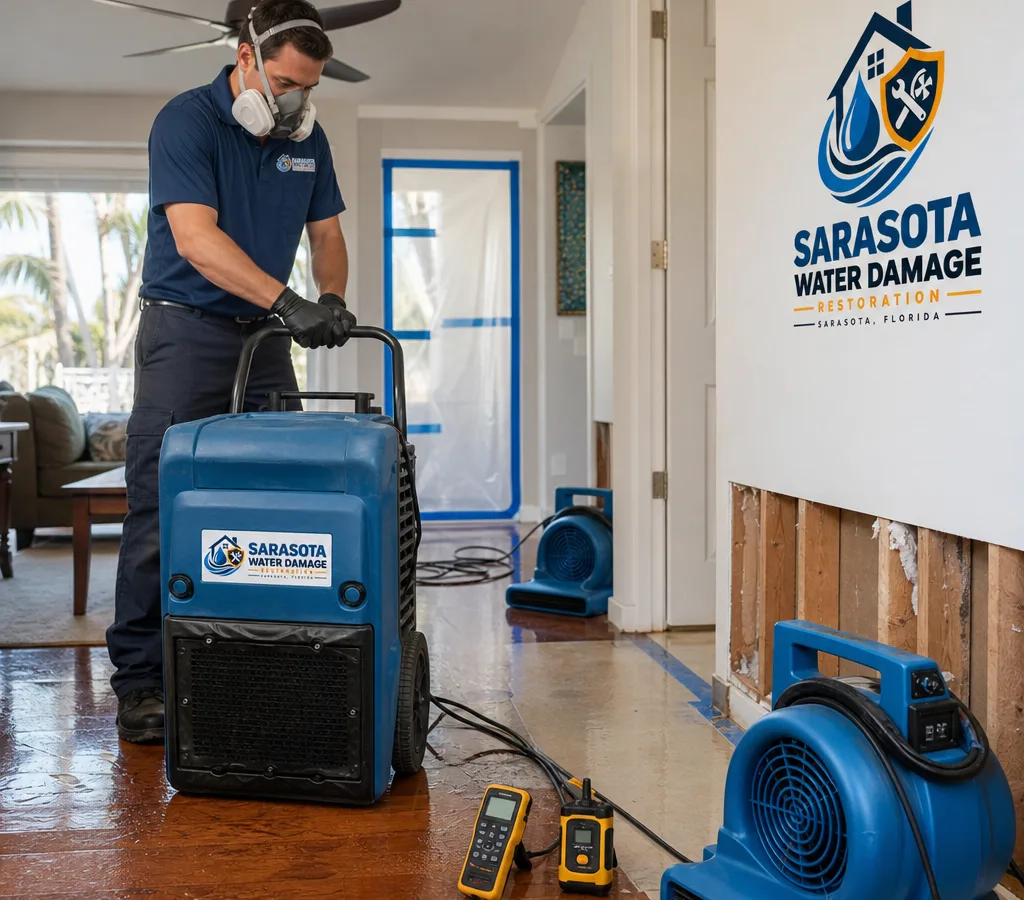
We remove standing water, then open up wet assemblies when needed—baseboards, drywall flood cuts, and toe kicks—so trapped moisture can actually escape.
Serving Sarasota, Florida & surrounding areas
Water Damage Repair • Sarasota, Florida
Stop the spread, dry the structure, and get a clear repair plan. We respond quickly, document what happened, and restore your home safely after leaks, floods, and burst pipes.
Extract • Dry • Repair
When water gets into flooring, drywall, or cabinets, the clock matters. Water damage repair Sarasota work is about more than removing visible water. It is about drying what you cannot see, checking moisture in framing and subfloors, and repairing materials in a way that prevents lingering odors, swelling, and mold growth.
Sarasota's humidity makes proper drying and monitoring even more important. Materials can feel dry at the surface while still holding moisture deeper inside. Our team at Sarasota Water Damage Restoration uses professional extraction, drying equipment, and moisture mapping to confirm when building materials are actually dry enough for repairs.
If you are still in the decision stage, start with two priorities: stop the source of water if safe to do so and limit further damage. Move valuables, avoid running HVAC if water is in returns, and keep foot traffic off soaked floors. Then bring in a restoration team to assess how far water traveled and what can be dried versus what must be removed and replaced.
Complete mitigation and repair support
We remove standing water, then open up wet assemblies when needed—baseboards, drywall flood cuts, and toe kicks—so trapped moisture can actually escape.
Dehumidifiers, air movers, and targeted drying techniques are matched to the material and room conditions, with moisture readings recorded to confirm progress.
Category of water matters. After a backup or contaminated water event, cleaning and disinfecting steps are different than for a clean supply line leak.
Once dry, we help move the project into repairs such as drywall replacement, texture matching, baseboards, trim, and flooring transitions based on the scope.
We document affected areas and drying progress so you have clear records for insurance conversations and for your own files.
You get a straightforward explanation of what we found, what we are doing today, and what must happen before repairs start.
Find hidden moisture
A common reason water damage repairs have to be redone is hidden moisture. In Sarasota homes, water often travels along the path of least resistance: under floating floors, behind baseboards, through drywall seams, and into cabinet boxes. If repairs start while materials are still wet, you can end up with:
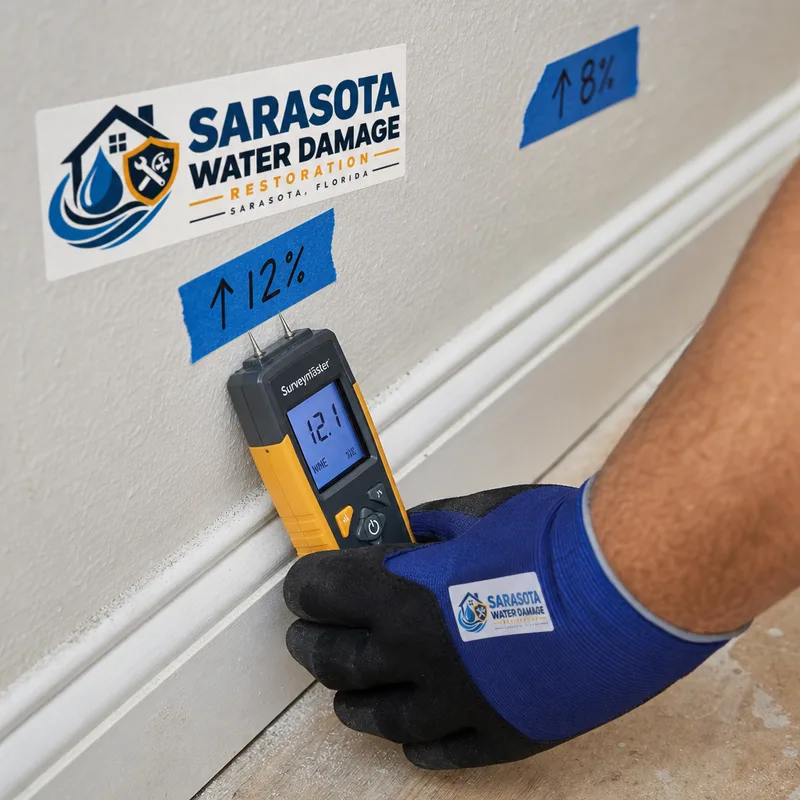
We use moisture meters and mapping to identify the full affected area, not just what is visibly stained. Drying is then set up to control temperature, humidity, and airflow so the structure dries evenly. Only after moisture levels are in a safe range do we recommend closing walls or reinstalling finishes.
If you are comparing providers, ask how they verify drying completion. “It feels dry” is not a plan. Measurements and written notes are.
Measured from start to finish
We identify the source area, map where water moved, and classify the type of water so cleaning and safety steps match the risk level.
Standing water is removed, wet porous materials are addressed, and the space is stabilized with controlled drying equipment to prevent further damage.
We track temperature, humidity, and moisture content. Adjustments are made as conditions change, which is important in Florida's humid environment.
After drying targets are met, we outline what is needed to put the area back together, including any drywall, trim, paint, cabinet, or flooring repairs.
We review completed work, answer questions, and provide documentation of what was done and why.
Planning the scope
Water damage repair in Sarasota typically ranges from about $900 to $7,500+, depending on how far water spread and what materials need removal and rebuild. A small, clean-water incident limited to one room may fall near the low end, while multi-room drying with drywall removal, flooring work, and cabinet repairs can reach the high end.
Final pricing changes with water category (clean vs contaminated), the amount of demolition required for access, equipment days needed for drying, and whether repairs involve specialty finishes or matching existing materials. The exact cost is confirmed after an on-site inspection and moisture mapping.
If you have active water intrusion or materials are still wet, getting a same-day assessment can prevent a small issue from turning into a multi-room rebuild.
Call for Emergency HelpAnswers before work begins
In many cases we can begin assessment and initial mitigation the same day, because early extraction and drying reduce how much material has to be removed. The exact start time depends on access, safety conditions, and whether the water source has been stopped.
We handle both the drying and the repair planning, because repairs depend on verified moisture levels. Once the structure is dry, we can address common rebuild items like drywall replacement, baseboards, trim, and coordinating flooring repairs based on the damage.
Stop the water source if it is safe, shut off electricity to affected areas if there is standing water near outlets, and move valuables out of wet zones. Avoid running fans into wall cavities unless you are sure the water is clean, because airflow can spread contaminants and moisture into other areas.
Most structural drying takes several days, but the timeline depends on how saturated materials are, what is trapped behind finishes, and how much humidity control is needed. In Florida, monitoring matters because high ambient humidity can slow evaporation without proper dehumidification.
Yes. We document affected materials, moisture readings, and drying progress so you have a clear record of what happened and what work was needed. Every policy and claim is different, but good documentation reduces back-and-forth during the review.
Yes, with the right safety steps. Storm-related water can be contaminated, so the work may require removal of porous materials, cleaning and disinfecting, and careful containment before repairs begin.
Not always, but mold risk increases when materials stay wet. The best prevention is fast extraction, controlled drying, and verification with moisture readings before closing walls or reinstalling finishes.
Sarasota service area
Water damage in Sarasota often comes from plumbing leaks, HVAC condensate issues, appliance supply lines, and storm-driven water intrusion. Many homes also have material combinations that react differently to moisture, such as tile over cement board in one area and engineered wood or laminate over an underlayment in another. That is why we tailor the approach room by room instead of assuming one setup fits all.
We work throughout Sarasota and nearby neighborhoods where fast access matters when water is still spreading, including areas around Downtown Sarasota, Southgate, Gulf Gate, and Palmer Ranch. Homes in these areas can vary widely in age and construction details, which changes where water travels and how repairs should be sequenced.
For a broader overview of our restoration services and how we triage different types of property damage, you can review water damage restoration in Sarasota, FL.
Dry first. Repair with confidence.
Tell us what happened, what areas are wet, and whether the water source is stopped. We will schedule an inspection, explain the drying plan, and outline the repairs needed to get your home back to normal.