Containment and negative air
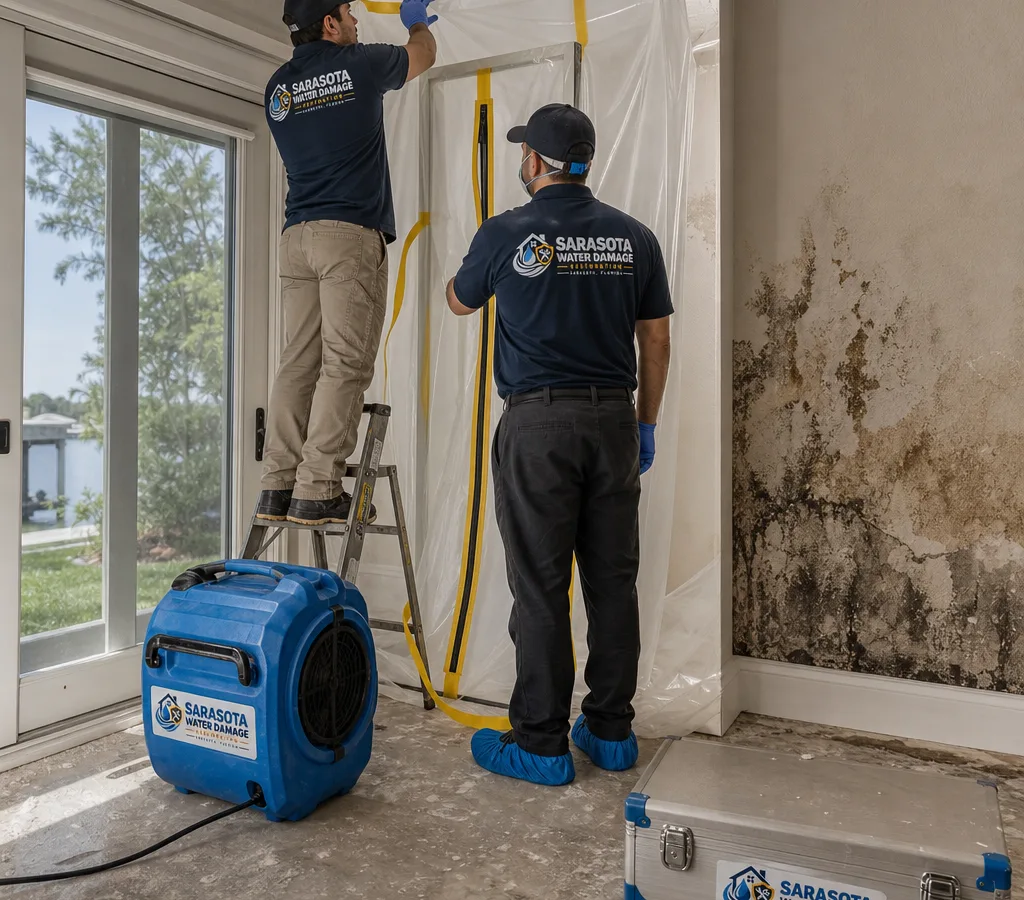
We isolate the work area with plastic barriers and use negative air pressure with HEPA filtration to reduce cross-contamination during removal and cleaning.
Serving Sarasota, Florida & surrounding areas
Mold Remediation • Sarasota, Florida
If you smell a musty odor, see staining, or have had a recent leak, the safest next step is a controlled inspection and a written remediation plan that protects the rest of the building.
Stop • Contain • Restore
Mold spreads when moisture and building materials stay damp long enough for growth to take hold. In Sarasota, humidity and frequent water intrusions—including roof leaks, HVAC condensation, plumbing issues, and storm-driven rain—can turn a small wet area into a bigger problem behind drywall, under flooring, or inside cabinets.
Our Sarasota mold remediation work focuses on three things: stopping the moisture source, containing and removing contaminated materials safely, and cleaning and verifying the affected area so you can move forward with confidence. We handle residential and commercial properties, and we document what we find so you have a clear scope before any work starts.
You will work with Sarasota Water Damage Restoration, a local team based in Sarasota, Florida. If your mold is connected to an active leak or recent flooding, starting with a moisture assessment is often the fastest way to prevent the affected area from growing into adjacent rooms.
Controlled remediation
We isolate the work area with plastic barriers and use negative air pressure with HEPA filtration to reduce cross-contamination during removal and cleaning.
When materials are unsalvageable—commonly drywall, baseboards, insulation, and some porous contents—removal is done methodically so hidden growth is addressed, not painted over.
Surfaces are HEPA vacuumed and cleaned with appropriate antimicrobial products based on the material and level of contamination.
Drying is part of remediation. Without moisture control, mold returns. We use commercial dehumidification and air movement as needed and track conditions during the job.
You get a written plan for the affected areas, what will be removed, what will be cleaned, and what to expect for access and timeline.
For homes and operating businesses, we plan containment, access, and cleanup so disruption is minimized while safety stays the priority.
Coastal moisture patterns
Sarasota properties see mold in predictable places because of how moisture moves through buildings in a humid coastal climate.
In Gulf Gate and Southgate, single-story homes with older windows, tired seals, or past roof repairs can let small water intrusions linger in wall cavities. Around Palmer Ranch, tightly sealed, newer construction can still develop problems when HVAC systems are oversized or condensate drains clog, leading to persistent humidity and damp returns or closets. Downtown Sarasota condos and multi-family buildings often involve shared walls and stacked plumbing, where a small leak can affect multiple units and require careful coordination for access and containment.
We treat each situation by tracing moisture to its source—leak, condensation, building envelope, or past water event—then building a controlled work zone. If you suspect a current leak or active wet materials, our team can also coordinate the first steps that overlap with water damage restoration so the structure is stabilized before remediation progresses.
Measured from start to finish
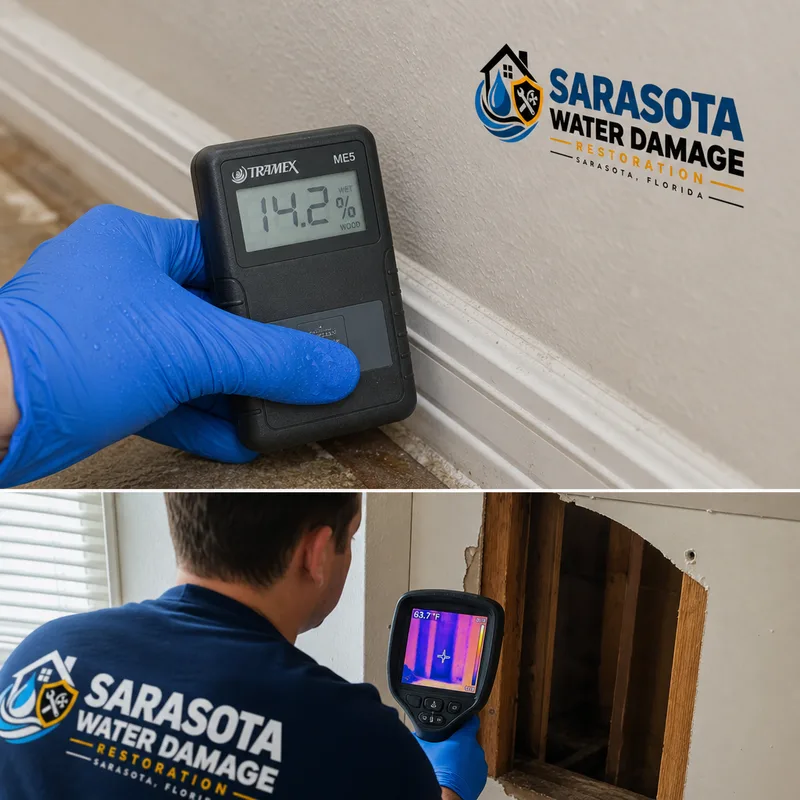
We look for visible growth, moisture patterns, and likely pathways such as drywall seams, cabinetry backs, supply lines, and HVAC areas. Where appropriate, we use moisture meters and thermal imaging to narrow down wet materials.
We define the affected areas, what materials can be cleaned versus removed, and how containment will be installed. We discuss access, protection of contents, and any occupant considerations.
We install containment and negative air, then remove contaminated porous materials and debris that cannot be effectively cleaned. Disturbance without containment can spread spores, which is why controlled removal matters.
We HEPA vacuum, wipe and clean framing and remaining surfaces, and treat as appropriate for the material. If odor is a concern, we address it by cleaning the source materials rather than masking it.
We dry the affected area and monitor conditions so materials return to a safe moisture level. When the area is clean and dry, it is ready for rebuild or finishing work as planned.
Planning the scope
Most Sarasota mold remediation projects typically range from about $1,500 to $6,500, with small, contained areas sometimes lower and larger multi-room or hidden-growth jobs reaching $10,000+ depending on demolition and rebuild needs. A limited area, such as a small bathroom or closet, is usually priced differently than remediation involving multiple rooms, HVAC-adjacent contamination, or extensive drywall and insulation removal.
Final cost depends on affected square footage, how much porous material must be removed, access in tight crawl or attic areas, the level of containment required, drying time, and whether moisture-source repair is part of the scope. Exact pricing is confirmed after an on-site inspection and a written remediation plan.
Customer evidence
“We had a musty smell that kept coming back even after cleaning. They found damp drywall behind a vanity, set up containment, and removed the affected section without spreading dust through the house. The plan and documentation made it easy to understand what was happening.”
“After a slow leak, we were worried about mold in a bedroom wall. The crew explained what could be cleaned versus what had to come out, and they kept the work area sealed and tidy. The difference in air quality was noticeable once everything was dry.”
Answers before work begins
Start time depends on current demand, but urgent situations usually begin with a quick inspection so containment and drying can be planned correctly. If there is active moisture, prioritizing the moisture source and stabilizing the area is often the most time-sensitive step.
Many projects can be completed while you stay in the home because the work zone is isolated with containment and negative air. If the affected area is in a critical space or occupants have heightened sensitivity, we will discuss temporary relocation options during the highest-disturbance phases.
Sometimes, yes, but only when the affected material can be effectively cleaned and dried. If mold has penetrated porous materials like drywall, insulation, or particleboard cabinetry, removal is usually required to eliminate the contamination.
Sampling is not required for every job, and many remediation scopes can be built from inspection and moisture evidence. If a third-party test is needed for documentation or peace of mind, we can coordinate timing so results match conditions before and after remediation.
Mold returns when moisture returns. Common causes include an unrepaired leak, recurring HVAC condensation, high indoor humidity, or wet materials that were not dried appropriately before walls were closed. A proper plan includes moisture-control steps so the space stays dry.
Bleach can lighten staining on some surfaces, but it does not solve hidden growth in porous materials or correct the moisture problem. For drywall, the right approach often involves controlled removal, HEPA cleaning, and drying, especially when the cavity behind the wall is affected.
Remediation typically leaves an area clean, dry, and ready for rebuilding, which may include replacing drywall, baseboards, or cabinetry components that were removed. We explain what will need to be rebuilt as part of the written scope so you can plan the next steps.
Act before contamination spreads
Tell us what you are seeing or smelling and where it is occurring. We will schedule an inspection, identify the moisture source, and provide a written Sarasota mold remediation scope built around safe containment, proper removal, and a clean finish that is ready to rebuild.